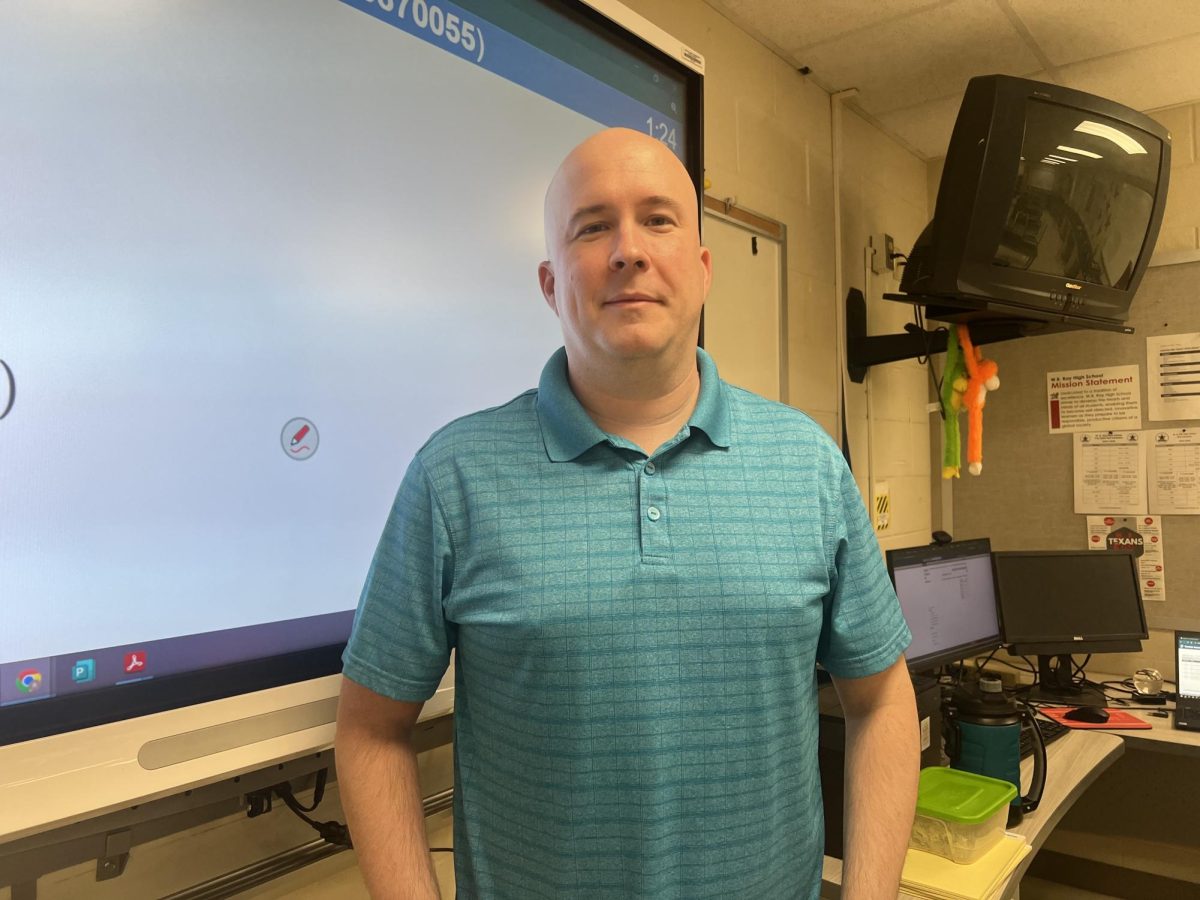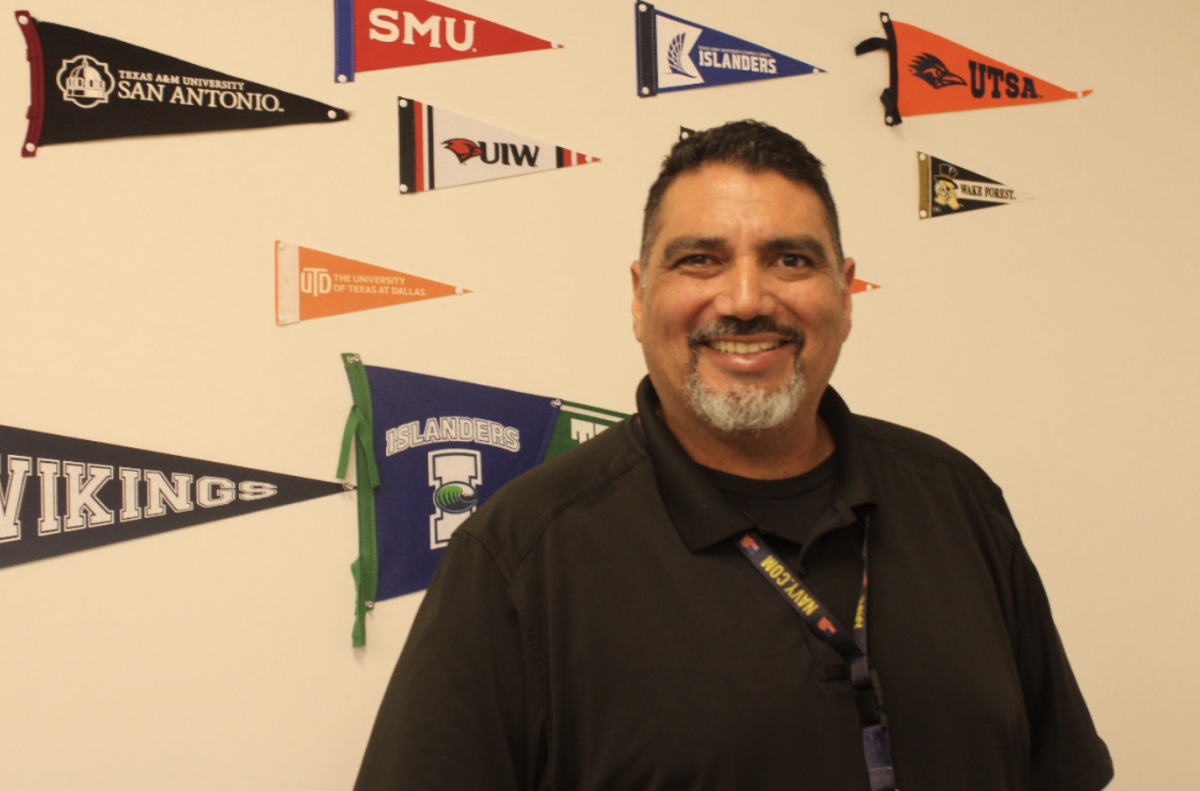
Ray High School AVID teacher and Dual Credit facilitator Baldemar Gonzales equips students with the study skills and guidance they need to succeed. He draws his love for teaching from his own experiences in the classroom, both as a teacher and an administrator.
AVID is a college-readiness program, and Dual Credit allows students to take classes at Del Mar College while in high school.
Q: What made you decide to become a teacher and teach AVID specifically?
A: This is my second time back in the classroom. I first started as a teacher 16 years ago at Robstown High School, and I retired from my business. And it was time to give back. So what’s the best way to give back? You want others to start where you left off. You don’t want them to go through the struggles. … That’s what made me become a teacher. And then my second time around is (because) I just needed to take a step back. There were some personal issues I was going through in my life … I needed to step away from administration, so I came back into the classroom last year. And as far as teaching AVID, I was an AVID director before for another district, and AVID is one of my passions. I believe that … if you give someone the tools, they will succeed. That’s why AVID is so important to me.
Q: Can you tell us about your teaching journey, including how long you’ve been teaching and any other subjects you’ve taught?
A: As far as being a teacher goes, this will be my fourth actual year of teaching and (a total of sixteen years in secondary education). I taught for two and a half years before I became an administrator. At the high school setting and I taught middle school as well. As soon as I could become an administrator, I became an administrator. I got myself out of the classroom very quickly and then realized that for the last decade or so, I had missed the classroom. Because of some personal situations and circumstances that happened in my life, I was able to get back into the classroom at Ray High School with Ms. Cuevas fully supporting that. … I couldn’t be happier. I love who I’m able to help every single day and the team that I’m able to work with…I’ve been through a lot of different positions in a school district and several different school districts, so I’ve seen quite a bit of it. I think I have a good perspective of the expectations of kids, teachers, administration, and everybody else that works here, from custodial services to our cafeteria to our paraprofessionals. It takes a whole team to get a school going every day.
Q: What is your teaching philosophy?
A: Teach with a passion, and you’ll never have to work a day in your life.
Q: Can you explain what AVID and Dual Credit are to students who aren’t in either program?
A: AVID is a program or a mantra of study skills. … Which just means that we have a set of study skills that you develop (like) the Cornell Note System. Study habits and other academic skill sets that are important for those that are pursuing not just school here, but advanced schooling and the academic side of the college. But also on the career side, because it creates a lot of time management. There’s a portfolio, there is a calendar, and other things that are associated with not just in school but transitioning to a career as well.
As far as Dual Credit … I was a (Dual Credit) instructor before, so I’m very familiar with the program. I also did it for other schools. … For a student that is not familiar with it, I recommend they speak to their counselor to go ahead and get familiar with what dual credit can do for them. I believe in dual credit because it allows you to take a college level course while still in high school and get it out of the way. … As far as the AVID goes, I believe that every student should have an AVID class because it does give you the fundamentals needed to be able to make that transition from the high school setting to Texan Street if you will.
Q: What is one thing you want all students to know before starting AVID or Dual Credit?
A: For Dual credit, be aware that the college course you take is … going to stay with you for eternity. It’s very hard if you are not successful in that college course because, unlike high school … college stays with you no matter what. So the only way to recover from a bad grade is to replace the bad grade. … If you decide to not do your best and fail a class, there are a lot of consequences that are more severe and more penalizing than just having to retake a class because you can get on scholastic probation, financial probation, a bunch of different things and limiting your chances or opportunities to continue your education because of a failed class. So I recommend you really think this through. If you’re going to do this, you need to pull both feet into it and really make the best of it and do everything you can. For every 50 minutes of college, you need three hours of after-school studies to be able to go with. That’s just the average that goes with that.
As far as AVID, I recommend AVID as a good all-around class to be able to give you the tools for your toolbox and your tool belt to be able to help you transition from the high school setting into what the reality of life is, where we’re all trying to go.
Q: What advice would you give to new faculty and staff members at RHS?
A: Each individual kid is responsible for their own growth. We just provide the path.
Q: Switching to things outside of education, what are some of your personal interests, and how do you like to spend your time outside of the classroom?
A: I’m a big, avid surf fishing guy. My son and I do a lot of fishing. We spend a substantial amount of time going out of town and traveling. Now that I’m back in the classroom, I have a lot more free time. This summer was my first actual summer that I didn’t have any kind of educational or academic duties, so we took a trip. We saw most of Texas, and that’s kind of what I want to do for this summer coming up and the next summer after he graduates. Finishing Texas road trips is what we’re doing and we’re really interested in. We do quite a bit on the weekends if we’re not fishing.
Q: Can you tell us about the clubs you sponsor: AVID Club and the Texan Anglers’ Fishing Club?
A: The fishing club is sponsored by Mr. Johnson, and it’s first year exception. We just got it established and we’ve been having a blast taking students out fishing, teaching them how to fish, and seeing them catch the very first fish. … It’s just been a phenomenal journey. Not only that, but we have gotten great community support from our fishermen community and fisherwomen, of course. It’s been so well received. We’ve got a lot of equipment donated. We started with zero, and Mr. Johnson’s work has been really instrumental in getting our word out there and getting the support from our fishing community. It’s just been an amazing thing to see.
The AVID club is for those students that are not able to get into the AVID club. It gives you all the same fundamentals and the same appreciation for what is avid. We also take advantage of all the field trips that AVID provides and all the growth opportunities … off campus as well as on campus. We’re also able to provide (and) hire tutors. We pay $12 an hour. (Tutors) are part-time employees of the district. I am your supervisor and you are hired as a student mentor … to work with all our students at Ray High School. … You don’t have to be in the AVID class. You just have to be a high school student to be employed as an AVID tutor. … We currently have six hired and probably another seven or eight that are waiting to be hired. …
AVID is an entire concept of not just the academic, but the career and … speaking ability. (AVID helps) our students who are not so extroverted come out. … Students stronger in public speaking encourage those who are uncomfortable, helping them overcome fear and build confidence… We pair them up for one-on-one mentorship. … It’s just an amazing thing to see the growth that happens when you’re able to take a student, a fellow classmate, and help them along the journey and not just on the academic side but on the personal side and the professional side as well.
Q: Lastly, what is your favorite part of teaching?
A: The first day of school and the last day of school. Getting to see the kids because I miss them; getting to see the new kids that come in. The eyes of excitement and the eyes of despair, and then, on graduation, the eyes of joy. It’s an amazing thing to see those kids that you spent the last 180 days with walk that stage and just walk into the world. Hopefully, we’ve given them enough tools for their toolbox to be able to have them succeed in life. … That’s why we do these things for them to start off where we left off and not have to re-invent the wheel.