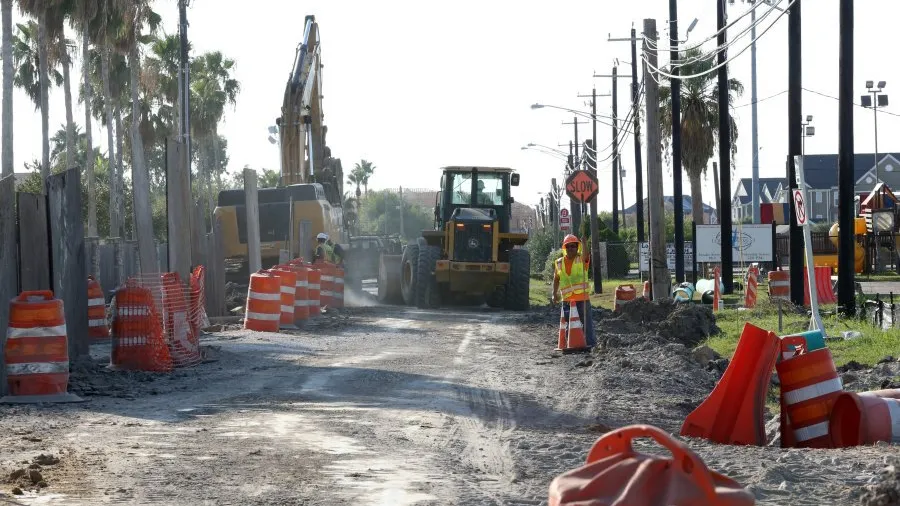
One of the favorite subjects of complaint when driving around Corpus Christi, the one thing that has become more apparent with every passing day, is the almost constant construction. It’s not just people at Ray High School; people from around the city have been getting increasingly frustrated due to the constant construction at large intersections (KRIS News 6, 2025). But so many people have wondered why there is so much construction, and it’s not because the city suddenly felt like ripping up the old roads and installing new ones; it’s because the City of Corpus Christi only recently attained the materials and manpower necessary through its Rapid Pavement Program, a five-year initiative launched in 2020 to address decades of deferred maintenance.
This push for improvement, though disruptive in the short term, is part of a broader trend in urban planning where cities must decide between focusing on new development or maintaining existing infrastructure. Building new roads may seem more appealing than maintenance, especially if new roads lead to economic development, but it often leaves existing infrastructure to crumble. Generally, cities neglect road infrastructure primarily due to underfunding, leading to deferred maintenance and a greater focus on building new roads instead of repairing existing ones. Road infrastructure requires two ingredients: the first is planning and building reliable, quality assets like roads and bridges, and the second is the monitoring and maintenance of those assets over their lifespan (SmartCitiesDrive, 2020).
Unfortunately, we haven’t been doing the best job at the second component for the past few decades, with some parts of Padre Island and certain neighborhoods being neglected for over 20 years (Corpus Christi Caller Times, 2023)! But it’s not for lack of caring — it’s because the city didn’t have proper staffing or proper training. The Public Works and Street Operations Department was significantly understaffed, with a workforce that had to be rebuilt after the department was largely dissolved, employees were not adequately trained and lacked the proper tools and basic knowledge to perform street functions correctly, and for years, improper and temporary repair techniques, such as using cold asphalt mix without proper preparation, were used, leading to rapid deterioration. All these factors led to the streets we now know — and may love?
But that’s not all; according to the Corpus Christi Caller Times, it would cost “$71 million a year for 60 years” to maintain just the residential roads around the city! That’s where the Rapid Pavement Program comes in. The program, which has been ahead of schedule, aims to fix a backlog of streets that were in poor condition and would have taken over 60 years to repair under the previous plan. The city has also recently approved additional funding for more repairs and a new Non-Structural Overlay Program to tackle more deterioration (City of Corpus Christi, 2025). Both of these initiatives combined seek to improve the road infrastructure of Corpus Christi so the residents can enjoy the pothole-free life we love!
While the ongoing construction around Corpus Christi may be inconvenient in the short term, it is a necessary and long-overdue effort to address years of deferred maintenance. The city’s Rapid Pavement Program, launched in 2020, marks a significant shift in how we manage and maintain infrastructure, finally providing the resources and manpower needed to tackle decades of neglect. Although this process can be disruptive, it’s crucial for improving the long-term quality of life for residents, ensuring safer and more reliable roads for everyone. With continued investments and initiatives like the Non-Structural Overlay Program, Corpus Christi is on track to repair the damages of the past and build a more sustainable, efficient infrastructure for the future. Though the construction zones may feel like a temporary inconvenience, they represent the city’s commitment to addressing its infrastructure needs and making necessary improvements for years to come.